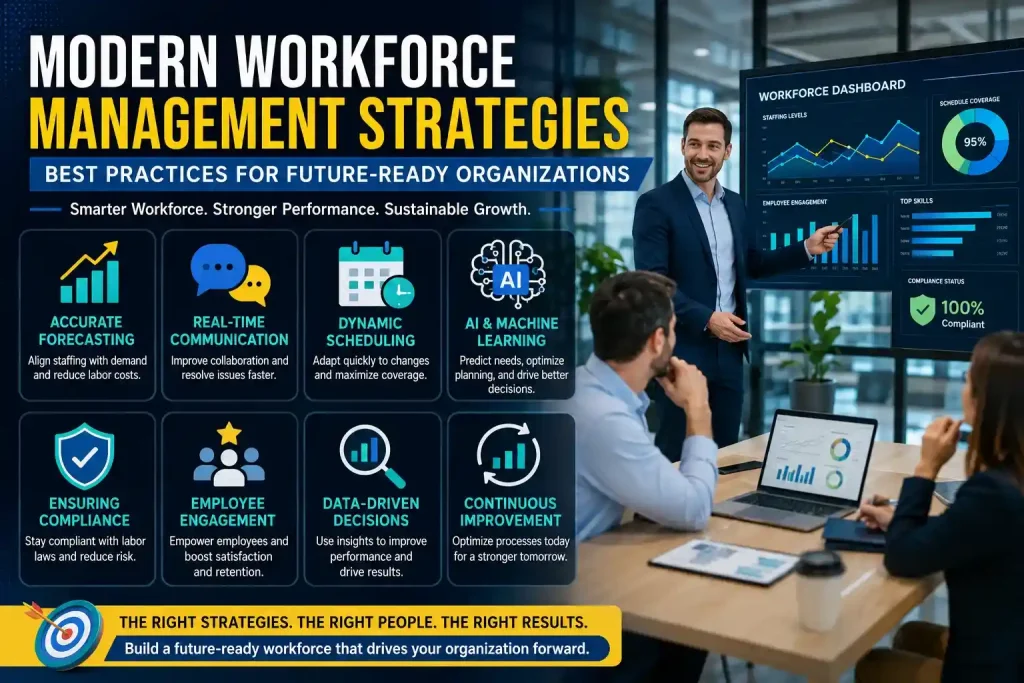
Modern Workforce Management Strategies: Best Practices for Future-Ready Organizations
Key Takeaways
- Accurate labor forecasting aligns staffing with real-time demand, reducing waste and enhancing service quality.
- Real-time communication fosters collaboration and swift problem resolution throughout the workforce.
- The integration of AI and machine learning transforms workforce planning and augments decision-making.
- Strict adherence to labor regulations and policies guards organizations from legal exposure.
- Transparency and flexibility in scheduling empower employees and improve retention rates.
Effective workforce management (WFM) is essential for organizations looking to enhance productivity, control labor costs, and boost employee satisfaction. The landscape of workplace operations has become increasingly complex, requiring businesses to adopt agile and intelligent approaches. By leveraging workforce management solutions, companies can navigate today’s dynamic demands, streamline operations, and keep employees engaged.
The transition to modern workforce management is not just about technology; it is also about understanding and anticipating both employee needs and operational requirements. As organizations grow and diversify, deploying innovative WFM strategies is key to building resilience, maintaining compliance, and ensuring continuous improvement.
From predictive labor forecasting to improving real-time communication and integrating cutting-edge AI tools, enterprises must carefully balance automation and human insight to achieve sustainable results. Effective WFM also focuses on regulatory compliance, employee empowerment, and making data-driven decisions, all of which are critical pillars of a future-ready workforce.
By prioritizing these elements, organizations place themselves on a trajectory for sustainable achievement while minimizing inefficiencies and mitigating legal or reputational risks. Modern workforce management adapts to change and helps organizations keep pace with evolving workforce trends.
Accurate Labor Forecasting
Precise labor forecasting forms the cornerstone of effective workforce management. By leveraging historical data, current trends, and market patterns, organizations can strategically predict staffing requirements. This proactive approach balances employee coverage with customer demand, preventing instances of both overstaffing and resource shortages. Accurate forecasting not only controls operational costs but also contributes to a superior customer experience by ensuring the right number of employees are in place at peak times. Organizations that prioritize data-driven forecasting are better positioned to adjust swiftly to market shifts. This becomes essential for businesses aiming to maintain a competitive advantage, especially in fast-moving industries.
Real-Time Communication
Open communication channels across all levels of the organization can enhance transparency and operational agility. By deploying digital platforms for real-time updates and messaging, companies make it easy for employees and managers to share feedback, notify of schedule changes, and resolve urgent issues as they arise. Real-time communication encourages collaboration, fosters a responsive culture, and supports continuity even during unexpected events. Organizations that prioritize responsive interactions are better able to adapt to fluctuating operational requirements. With clear lines of communication, businesses ensure every team member feels connected and informed, ultimately improving the workplace environment.
Dynamic Scheduling
Dynamic scheduling involves flexible systems that can react quickly to changes—such as last-minute absences, seasonal demand, or emerging projects. Modern software tools empower managers to instantly adjust rosters, fill gaps through automated notifications, and even let employees swap shifts where needed. Dynamic scheduling ensures optimal coverage at all times, reducing downtime and helping businesses maintain high performance under pressure. This flexibility also benefits employees, who gain more control over their own work-life balance. The use of dynamic scheduling tools also helps managers cope efficiently with unexpected operational challenges.
Integrating AI and Machine Learning
Artificial intelligence and machine learning are fast becoming the backbones of advanced workforce management. These technologies quickly process vast datasets to uncover meaningful patterns, forecast staffing needs, and evaluate operational risk. AI-driven recommendations help managers optimize shift planning, monitor compliance, and identify hidden bottlenecks in workforce allocation. Machine learning algorithms adapt over time, making future predictions more accurate and processes more efficient. Industry leaders such as Forbes have highlighted how AI is fundamentally changing the way businesses manage people and resources. As AI capabilities continue to advance, the potential for further streamlining workforce management processes will only increase.
Ensuring Compliance
Adapting to an evolving regulatory environment is especially challenging for large and distributed teams. Effective workforce management calls for tools that monitor and enforce compliance with local, state, and federal labor laws. Automated systems can track work hours, breaks, and overtime—ensuring record accuracy and minimizing legal exposure. Regular training and compliance audits further mitigate risk, and keeping everyone updated on policy changes helps reduce disputes and financial liabilities. Purposeful compliance fosters a safer, more equitable workplace for everyone involved. By investing in compliance-focused technology and procedures, organizations can confidently navigate the complexities of modern labor regulations.
Enhancing Employee Engagement
Empowering employees through transparent schedules and increased flexibility directly impacts morale and retention. Self-service portals that let employees check schedules, request changes, or view performance insights are key features of a modern WFM strategy. When individuals feel heard and valued, they are more likely to stay engaged, deliver quality work, and remain loyal to the organization. Retaining engaged talent also reduces long-term recruitment and training costs. Creating a workplace where employees’ voices matter builds trust and encourages long-term commitment, driving organizational success.
Data-Driven Decision Making
Analyzing workforce data enables leaders to make informed decisions that benefit both the business and its people. This data-driven approach uncovers inefficiencies, highlights best practices, and reveals hidden opportunities for growth. Performance dashboards, trend analytics, and benchmarking can support strategic workforce planning, resource allocation, and cost management. Regularly reviewing these insights also ensures continuous alignment with organizational goals and market realities. Over time, smarter decisions rooted in strong evidence will contribute to greater efficiency, competitiveness, and workplace satisfaction.
Continuous Improvement
The best workforce management strategies are never static. By encouraging open employee feedback, regularly updating processes, and leveraging performance analytics, organizations foster a culture of continuous improvement. Ongoing innovation ensures that staffing practices evolve in line with changing business requirements and industry trends. Proactive WFM empowers organizations to boost productivity, develop talent, and future-proof their operations for whatever challenges may arise. When improvement is viewed as a continual process, the organization maintains adaptability and can more effectively meet the needs of its workforce and customers.
With effective workforce management, organizations achieve more than operational efficiency they cultivate a work environment that is agile, compliant, and responsive to both employee and customer needs. By staying proactive with the latest solutions and industry best practices, businesses are well-positioned for ongoing success.