Top Qualities to Look for in Professional Solar Installers
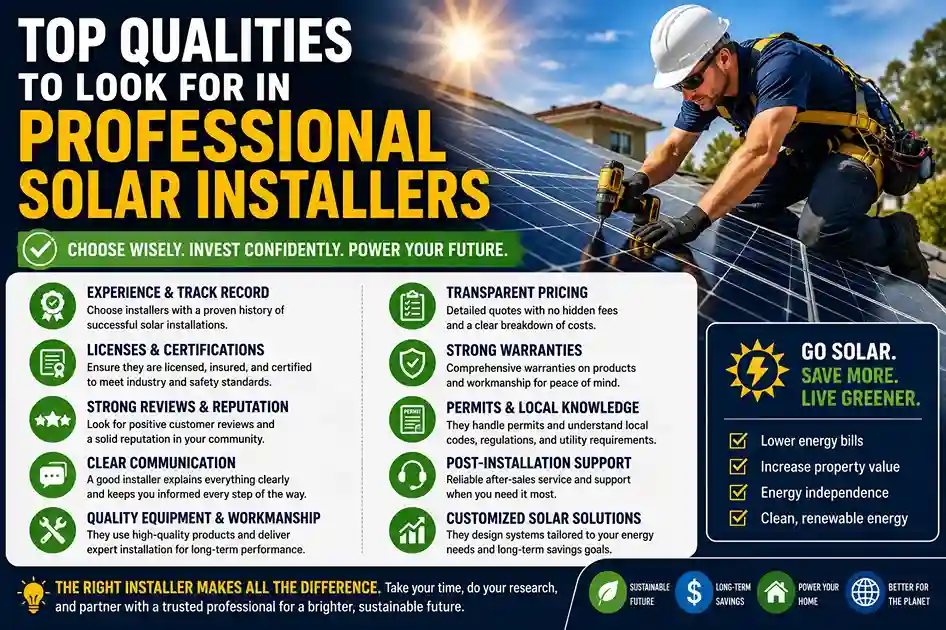
As more homeowners and businesses switch to renewable energy, solar power has become one of the most popular long-term investments available today. A properly installed solar energy system can reduce electricity bills, increase property value, and lower environmental impact for decades.
However, the success of your solar investment depends heavily on one critical factor: choosing the right solar installer.
Not all solar companies offer the same level of expertise, service, or reliability. A poorly installed system can lead to reduced efficiency, unexpected maintenance costs, safety concerns, and warranty issues. On the other hand, an experienced and reputable installer can help maximize energy production and ensure your system performs efficiently for many years.
If you’re considering solar energy for your home or business, here are the top qualities to look for when choosing professional solar installers.
Why Choosing the Right Solar Installer Matters
Solar panels are designed to last 25 years or more. Because solar energy systems represent a significant financial investment, selecting a qualified installer is just as important as choosing quality equipment.
Professional installers help ensure:
- Proper system design
- Maximum energy production
- Safe electrical connections
- Compliance with local regulations
- Successful inspections
- Long-term system reliability
- Warranty protection
The installer you choose will directly impact the performance and lifespan of your solar energy system.
Industry Experience and Proven Track Record
Experience is one of the first factors homeowners should evaluate.
Solar installation involves:
- Electrical work
- Structural assessment
- Engineering calculations
- Permit management
- Utility coordination
Companies with years of experience have typically encountered a wide range of installation scenarios and know how to overcome potential challenges.
When evaluating an installer, ask:
- How long have you been in business?
- How many solar systems have you installed?
- Do you specialize in residential, commercial, or both?
A company with a strong track record often provides greater confidence and reliability.
Proper Licensing and Certifications
Professional solar installers should possess all required licenses and certifications.
Licensing requirements vary by state and municipality, but reputable installers should willingly provide proof of credentials.
Look for:
- Electrical licenses
- Contractor licenses
- Business licenses
- Insurance coverage
Industry certifications demonstrate advanced training and commitment to professional standards.
Qualified professionals stay current with evolving technologies, safety requirements, and installation best practices.
Strong Customer Reviews and Reputation
Customer feedback provides valuable insight into a company’s performance.
Research reviews across multiple platforms and pay attention to recurring themes.
Positive indicators include:
- Professional communication
- On-time project completion
- High-quality workmanship
- Excellent customer service
- Responsive support
Look beyond star ratings and read detailed customer experiences.
Consistent positive feedback often reflects a company’s commitment to customer satisfaction.
Comprehensive Solar Consultation Process
Every property is unique.
Professional installers should conduct a thorough assessment before recommending a solar system.
A quality consultation typically includes:
- Roof evaluation
- Energy usage analysis
- Shading assessment
- Utility bill review
- System design recommendations
Avoid companies that provide generic estimates without evaluating your property’s specific conditions.
Customized solutions generally deliver better long-term results.
High-Quality Equipment Options
The best solar installers work with trusted manufacturers and offer high-quality equipment.
Important components include:
Solar Panels
Reliable solar panels should provide:
- High efficiency
- Strong warranties
- Proven performance records
Inverters
Inverters convert solar energy into usable electricity.
Quality installers often offer several inverter options to match different system needs.
Mounting Systems
The mounting structure plays a critical role in protecting both your roof and solar panels.
Quality materials help ensure durability under various weather conditions.
Ask installers about the brands they use and why they recommend them.
Transparent Pricing
Trustworthy solar companies provide clear and transparent pricing.
A detailed proposal should outline:
- Equipment costs
- Labor charges
- Permit fees
- Inspection costs
- Financing terms
- Estimated savings
Be cautious of unusually low quotes that may involve lower-quality equipment or hidden fees.
The cheapest option is not always the best value.
Instead, focus on overall quality, reliability, and long-term return on investment.
Knowledge of Local Regulations and Permits
Solar installations must comply with local building codes and utility requirements.
Professional installers should handle:
- Permit applications
- Utility interconnection paperwork
- Inspections
- Regulatory compliance
Experienced local installers understand regional requirements and can help avoid delays.
Their familiarity with local authorities often streamlines the approval process.
Strong Warranty Coverage
Solar systems are long-term investments, making warranties extremely important.
Professional installers should explain available warranty protection clearly.
Common warranty categories include:
Equipment Warranty
Protects solar panels, inverters, and system components.
Workmanship Warranty
Covers installation-related issues.
Performance Warranty
Guarantees a certain level of energy production over time.
Understanding warranty terms helps protect your investment and provides peace of mind.
Excellent Communication Skills
Communication often separates outstanding installers from average providers.
Throughout the project, installers should:
- Answer questions promptly
- Provide regular updates
- Explain technical information clearly
- Set realistic expectations
A company that communicates effectively before installation is more likely to provide quality support afterward.
Homeowners should never feel confused about project timelines, costs, or system performance.
Strong Safety Standards
Solar installation involves working with electrical systems and rooftop structures.
Professional installers prioritize safety at every stage.
Important safety practices include:
- Employee training
- Proper fall protection
- Electrical safety procedures
- Compliance with safety regulations
- Adequate insurance coverage
Companies that emphasize safety help protect both workers and property owners.
Customized System Design
No two properties have identical energy needs.
Professional solar installers design systems based on:
- Household energy consumption
- Roof size
- Roof orientation
- Local climate
- Budget goals
Customized designs help maximize energy production while avoiding unnecessary costs.
A properly sized system delivers better efficiency and long-term value.
Financing Expertise
Solar financing options continue expanding.
Professional installers should explain available options, including:
- Cash purchases
- Solar loans
- Leases
- Power purchase agreements (PPAs)
Understanding financing choices helps homeowners select the option that best aligns with their financial goals.
Installers should explain both benefits and potential limitations of each option.
Local Market Knowledge
Local experience offers significant advantages.
Installers familiar with your region understand:
- Weather conditions
- Utility programs
- State incentives
- Local energy costs
- Building code requirements
This knowledge helps optimize system design and maximize available incentives.
Local companies may also provide faster service and support when needed.
Post-Installation Support
The relationship with your installer should not end when installation is complete.
Reliable companies offer ongoing support, including:
- System monitoring
- Maintenance guidance
- Troubleshooting assistance
- Warranty service
Strong post-installation support helps ensure your system continues performing at peak efficiency.
Before signing a contract, ask what support is available after activation.
Ability to Explain Energy Savings Realistically
Reputable installers provide realistic estimates based on actual data.
They should explain:
- Expected energy production
- Utility bill savings
- Return on investment
- Payback period
Be cautious of companies making unrealistic promises about savings or performance.
Accurate projections demonstrate professionalism and integrity.
Strong Project Management Skills
Solar projects involve multiple steps, including:
- Site assessments
- Design approval
- Permitting
- Equipment delivery
- Installation
- Inspections
- Utility connections
Professional installers coordinate these activities efficiently to minimize delays.
Well-managed projects often result in smoother installations and higher customer satisfaction.
Commitment to Renewable Energy Education
The best solar companies focus on educating customers rather than simply making sales.
They help homeowners understand:
- Solar technology
- Energy consumption patterns
- Battery storage options
- Net metering programs
- Future expansion opportunities
An educational approach empowers customers to make informed decisions.
Red Flags to Watch For
While searching for an installer, be cautious of warning signs such as:
- High-pressure sales tactics
- Vague pricing
- Lack of references
- Poor online reviews
- No proof of licensing
- Unrealistic savings claims
- Limited warranty coverage
Identifying these red flags early can help avoid costly mistakes.
Questions to Ask Before Hiring a Solar Installer
Before making a final decision, consider asking:
- How many installations have you completed?
- Are you licensed and insured?
- What warranties do you offer?
- Which equipment brands do you recommend?
- How long will the project take?
- Who handles permits and inspections?
- What post-installation support is available?
- Can you provide customer references?
Their answers can reveal a great deal about their professionalism and expertise.
Final Thoughts
Installing solar panels is one of the most impactful investments homeowners and businesses can make. However, the quality of your installation directly affects system performance, energy savings, and long-term reliability.
By focusing on experience, certifications, customer reviews, equipment quality, transparency, warranty coverage, and ongoing support, you can confidently choose a professional solar installer that meets your needs.
Taking the time to research and compare providers today can help ensure decades of clean energy, lower utility bills, and greater peace of mind in the future.