
How to Buy a House in Maryland: A Complete Home Buying Process Guide
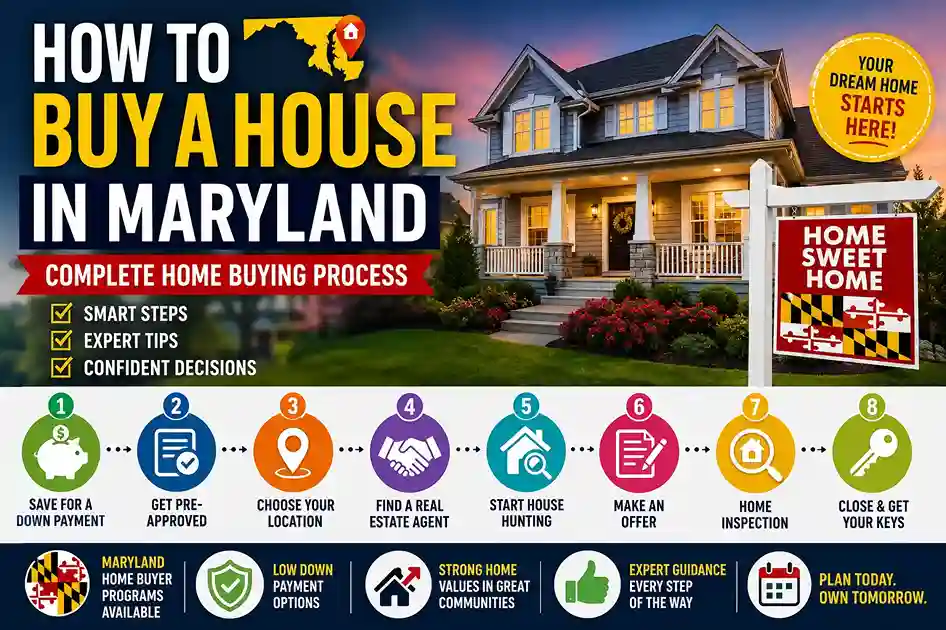
Buying a home is one of the biggest financial decisions most people will ever make. Whether you’re a first-time homebuyer or looking to upgrade to a larger property, understanding the Maryland home-buying process can help you avoid costly mistakes and make informed decisions.
Maryland remains one of the most desirable states for homeownership thanks to its strong economy, excellent schools, diverse communities, and convenient access to major cities like Baltimore and Washington. From waterfront properties along the Chesapeake Bay to suburban neighborhoods and rural retreats, Maryland offers housing options for nearly every lifestyle and budget.
However, navigating the home-buying process can feel overwhelming if you don’t know where to start. This guide walks you through every step of buying a house in Maryland, from saving for a down payment to receiving the keys to your new home.
Why Buy a Home in Maryland?
Maryland consistently attracts homebuyers because of its quality of life and economic opportunities.
Some benefits of buying a home in Maryland include:
- Strong job market
- Excellent public schools
- Access to major metropolitan areas
- Diverse housing options
- Beautiful waterfront communities
- Rich history and culture
- Strong property appreciation in many areas
Whether you prefer city living, suburban comfort, or countryside tranquility, Maryland offers something for everyone.
Step 1: Evaluate Your Financial Situation
Before browsing listings online, take a close look at your finances.
Understanding your financial health will help determine:
- How much house you can afford
- Your mortgage eligibility
- Your potential interest rate
- Your monthly housing budget
Review the following:
Credit Score
Your credit score significantly impacts mortgage approval and interest rates.
Generally:
- 740+ receives the best rates
- 680–739 receives competitive rates
- 620–679 may still qualify for many loans
- Below 620 may require specialized loan programs
Improving your credit before applying can save thousands of dollars over the life of your loan.
Debt-to-Income Ratio
Lenders evaluate your debt-to-income ratio (DTI) to determine whether you can comfortably manage mortgage payments.
Most lenders prefer a DTI below 43%, although some loan programs allow higher ratios.
Emergency Savings
In addition to your down payment, maintain emergency savings to cover unexpected expenses after moving into your new home.
Step 2: Save for a Down Payment
The down payment is one of the largest upfront costs when purchasing a home.
Many buyers assume they need 20% down, but that isn’t always the case.
Common options include:
Conventional Loans
- Often require 3% to 20% down
- Higher down payments may eliminate private mortgage insurance (PMI)
FHA Loans
- Minimum 3.5% down payment
- Popular among first-time buyers
VA Loans
- Available for eligible veterans and active-duty military members
- Often require no down payment
USDA Loans
- Available in eligible rural areas
- May offer zero-down financing
Maryland also offers several homebuyer assistance programs that can help with down payments and closing costs.
Step 3: Get Pre-Approved for a Mortgage
Mortgage pre-approval is one of the most important steps in the home-buying process.
A pre-approval letter shows sellers that you are a serious buyer and provides a clear budget for your home search.
To get pre-approved, lenders typically request:
- Tax returns
- W-2 forms
- Pay stubs
- Bank statements
- Identification
- Employment verification
Shop around with multiple lenders to compare:
- Interest rates
- Loan terms
- Fees
- Closing costs
Even a small difference in interest rates can significantly impact long-term costs.
Step 4: Research Maryland Housing Markets
Home prices vary significantly across Maryland.
Popular areas include:
Baltimore County
Offers a mix of urban and suburban living with diverse housing options.
Montgomery County
Known for strong schools and proximity to Washington, D.C.
Howard County
Frequently ranked among the best places to live in Maryland.
Anne Arundel County
Offers waterfront living and convenient access to major employment centers.
Frederick County
Appeals to buyers seeking affordability and suburban growth.
When researching neighborhoods, consider:
- School quality
- Crime rates
- Property taxes
- Commute times
- Public transportation
- Local amenities
- Future development plans
Choosing the right location is just as important as choosing the right home.
Step 5: Hire an Experienced Real Estate Agent
A knowledgeable real estate agent can make the home-buying process much easier.
An experienced Maryland agent can help:
- Identify suitable properties
- Schedule showings
- Analyze market values
- Negotiate offers
- Manage paperwork
- Coordinate inspections
- Navigate closing requirements
When selecting an agent, consider:
- Local market experience
- Online reviews
- Transaction history
- Communication skills
- Knowledge of your target area
The right agent becomes your advocate throughout the transaction.
Step 6: Start House Hunting
Now comes the exciting part: finding your future home.
Create two lists before beginning your search:
Must-Have Features
Examples include:
- Minimum number of bedrooms
- Home office
- Garage
- Large backyard
- Updated kitchen
- Specific school district
Nice-to-Have Features
Examples include:
- Finished basement
- Swimming pool
- Smart home technology
- Walk-in closets
- Waterfront views
Separating needs from wants helps narrow your search and prevent emotional decision-making.
Step 7: Attend Showings and Open Houses
Photos don’t always tell the whole story.
Visiting homes in person allows you to evaluate:
- Property condition
- Layout functionality
- Neighborhood atmosphere
- Noise levels
- Traffic patterns
- Nearby amenities
Pay close attention to:
- Roof condition
- Foundation issues
- Plumbing systems
- HVAC systems
- Electrical panels
- Signs of water damage
Taking notes and photos during visits can help compare properties later.
Step 8: Make a Competitive Offer
Once you find the right home, your agent will help prepare an offer.
Your offer typically includes:
- Purchase price
- Earnest money deposit
- Financing terms
- Inspection contingency
- Appraisal contingency
- Closing timeline
In competitive Maryland markets, sellers may receive multiple offers.
Strategies that may strengthen your offer include:
- Larger earnest money deposits
- Flexible closing dates
- Strong pre-approval documentation
However, avoid waiving important protections without understanding the risks.
Step 9: Schedule a Home Inspection
A home inspection is one of the most important safeguards for buyers.
A licensed inspector evaluates the property’s major systems and identifies potential issues.
Inspections typically cover:
- Foundation
- Roof
- Plumbing
- Electrical systems
- HVAC equipment
- Structural components
- Windows and doors
- Insulation
Additional specialized inspections may include:
- Radon testing
- Mold inspections
- Pest inspections
- Septic evaluations
If significant issues are discovered, buyers may negotiate repairs or request credits from the seller.
Step 10: Secure Final Mortgage Approval
After the inspection period, your lender completes the underwriting process.
Avoid major financial changes during this stage, including:
- Opening new credit accounts
- Large purchases
- Job changes
- Missed bill payments
Lenders may recheck your financial profile before issuing final approval.
Staying financially stable helps prevent last-minute delays.
Step 11: Obtain a Home Appraisal
Most lenders require a professional appraisal.
The appraiser determines the home’s market value to ensure the property supports the loan amount.
If the appraisal comes in lower than the purchase price, buyers and sellers may need to renegotiate terms.
A successful appraisal is a key milestone toward closing.
Step 12: Prepare for Closing Costs
Many first-time buyers focus solely on the down payment and forget about closing costs.
Closing costs in Maryland generally range between 2% and 5% of the home’s purchase price.
Common expenses include:
Lender Fees
- Loan origination fees
- Underwriting fees
- Credit report fees
Title Fees
- Title search
- Title insurance
- Recording fees
Prepaid Expenses
- Property taxes
- Homeowners insurance
- Mortgage interest
Understanding these costs early helps avoid surprises.
Step 13: Complete the Final Walkthrough
Before closing, you’ll conduct a final walkthrough of the property.
This ensures:
- Agreed-upon repairs were completed
- No new damage occurred
- Appliances remain in place
- Property condition matches contract terms
If issues arise, they should be addressed before closing documents are signed.
Step 14: Close on Your New Maryland Home
Closing day is the final step.
You’ll review and sign several documents, including:
- Mortgage agreement
- Promissory note
- Closing disclosure
- Property deed
After signing and funding are complete, ownership transfers to you.
You’ll receive the keys and officially become a homeowner.
Common Mistakes to Avoid
Many buyers encounter problems because of avoidable mistakes.
Avoid:
- Skipping mortgage pre-approval
- Overextending your budget
- Ignoring closing costs
- Waiving inspections unnecessarily
- Making major purchases before closing
- Choosing a home based solely on emotions
A disciplined approach helps ensure a successful transaction.
First-Time Homebuyer Programs in Maryland
Maryland offers several programs designed to help first-time buyers.
Potential benefits may include:
- Down payment assistance
- Closing cost assistance
- Reduced interest rates
- Special financing options
Research available state and local programs before beginning your search.
These resources can make homeownership more affordable.
Final Thoughts
Buying a house in Maryland is an exciting milestone, but it requires careful planning and informed decision-making. By understanding each stage of the home-buying process—from improving your finances and obtaining pre-approval to inspections and closing—you can approach the journey with confidence.
Maryland’s diverse communities, strong economy, and excellent quality of life continue to make it one of the most attractive states for homebuyers. With the right preparation, experienced professionals, and a clear budget, you’ll be well positioned to find the perfect Maryland home and successfully navigate the buying process.