
What to Do if You Struggle With DIY Renovations
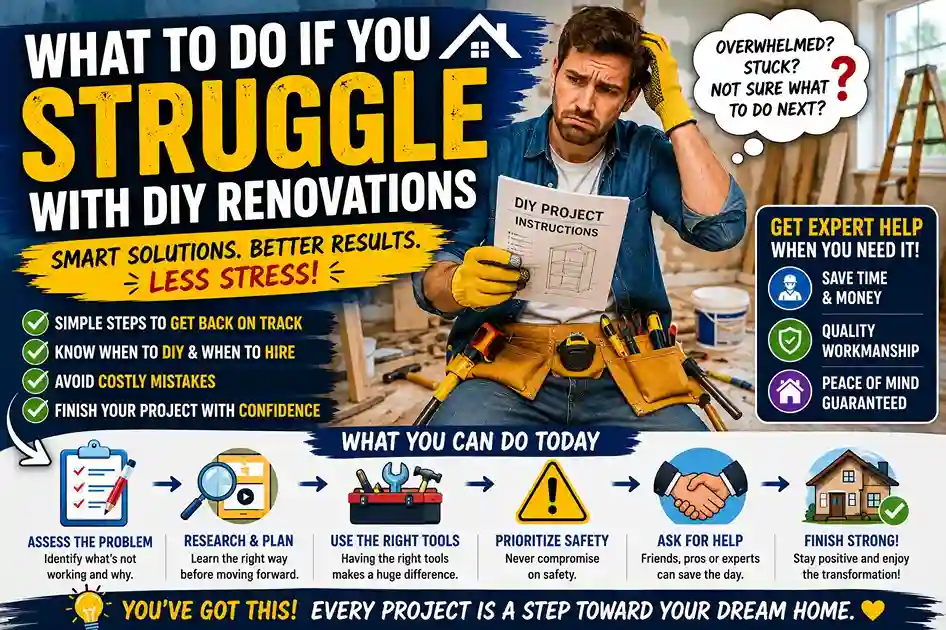
DIY home renovations can be exciting, rewarding, and cost-effective. Television shows, social media videos, and home improvement blogs often make renovation projects look simple enough for anyone to tackle. However, once the work begins, many homeowners quickly discover that renovations are more challenging than expected.
From uneven flooring and incorrect measurements to electrical mistakes and budget overruns, DIY projects can become stressful when things don’t go according to plan. The good news is that struggling with a renovation project does not mean you’ve failed. It simply means you need the right strategy to move forward.
Whether you’re halfway through a kitchen remodel, facing unexpected plumbing issues, or feeling overwhelmed by a home improvement project, there are practical steps you can take to regain control and successfully complete your renovation.
Why DIY Renovations Become Difficult
Many homeowners begin projects with confidence but underestimate the complexity involved.
Common reasons DIY renovations become overwhelming include:
- Lack of experience
- Incorrect planning
- Hidden structural issues
- Budget limitations
- Insufficient tools
- Time constraints
- Building code requirements
- Unexpected repairs
Even experienced DIY enthusiasts occasionally encounter challenges that require professional assistance.
Recognizing these obstacles early can prevent costly mistakes and project delays.
Take a Step Back and Assess the Situation
When a project becomes frustrating, avoid making rushed decisions.
Instead, pause and evaluate:
- What has already been completed
- What problems have emerged
- Which tasks remain unfinished
- Whether safety concerns exist
- Your current budget
A clear assessment helps identify the best path forward.
Sometimes a short break provides the perspective needed to solve problems more effectively.
Identify Exactly Where You’re Struggling
Not every renovation challenge requires outside help.
Determine whether the issue involves:
Skills and Knowledge
You may lack experience with:
- Electrical work
- Plumbing
- Tile installation
- Cabinet installation
- Flooring systems
Time Management
Many homeowners underestimate the amount of time required to complete renovations.
Specialized Equipment
Certain projects require professional-grade tools that may not be practical to purchase for a single use.
Safety Concerns
Tasks involving structural changes, electrical systems, gas lines, or roofing can present significant risks.
Understanding the specific challenge allows you to find the right solution.
Research Before Continuing
One of the biggest mistakes homeowners make is continuing without fully understanding the problem.
Take time to research:
- Manufacturer instructions
- Building code requirements
- Professional tutorials
- Product specifications
- Industry best practices
Reliable information can often prevent further mistakes.
However, avoid relying solely on short social media videos, which may oversimplify complex projects.
Look for trusted sources and detailed educational resources.
Break Large Projects Into Smaller Tasks
Large renovation projects can feel overwhelming.
Instead of focusing on the entire renovation, divide the project into manageable stages.
For example, a bathroom remodel may include:
- Demolition
- Plumbing preparation
- Electrical updates
- Drywall installation
- Flooring installation
- Fixture installation
- Painting
- Final finishing work
Completing one step at a time makes the process more manageable and less stressful.
Create a Realistic Budget
Budget problems are among the most common renovation challenges.
Many homeowners underestimate costs associated with:
- Materials
- Permits
- Tools
- Waste removal
- Unexpected repairs
Review your spending and update your budget based on current conditions.
Experts often recommend setting aside an additional 10% to 20% contingency fund for unexpected expenses.
Having financial flexibility can reduce stress when surprises arise.
Know When to Call a Professional
One of the smartest decisions a homeowner can make is recognizing when professional help is necessary.
Projects that often require professional expertise include:
Electrical Work
Improper electrical installations can create fire hazards and safety risks.
Structural Modifications
Removing walls or modifying load-bearing structures should generally involve professional evaluation.
Roofing Repairs
Roof work can be dangerous and technically complex.
Plumbing Systems
Major plumbing errors can result in costly water damage.
HVAC Installations
Heating and cooling systems require specialized knowledge and equipment.
Hiring a professional for critical tasks may ultimately save time, money, and frustration.
Consider a Hybrid DIY Approach
You do not have to choose between completing everything yourself or hiring a contractor for the entire project.
Many homeowners successfully use a hybrid approach.
For example:
- Complete demolition yourself
- Hire professionals for electrical work
- Handle painting independently
- Outsource plumbing installations
- Install simple fixtures personally
This strategy allows homeowners to save money while ensuring complex work is completed correctly.
Learn From Mistakes Without Panic
Mistakes happen during nearly every renovation project.
Common examples include:
- Incorrect measurements
- Paint color issues
- Uneven tile placement
- Material shortages
- Installation errors
Instead of becoming discouraged, view mistakes as learning opportunities.
Many problems can be corrected without restarting the entire project.
Remaining calm often leads to better solutions.
Prioritize Safety Above Everything Else
No renovation goal is worth risking injury.
Always prioritize safety by:
- Wearing protective equipment
- Using tools properly
- Following manufacturer instructions
- Turning off power when necessary
- Maintaining a clean work area
If a task feels unsafe or unfamiliar, seek professional guidance.
Accidents can quickly turn a renovation project into a medical emergency.
Ask for Help
Many homeowners try to manage every aspect of a renovation alone.
However, asking for help can significantly reduce stress.
Consider reaching out to:
- Family members
- Friends with experience
- Local contractors
- Home improvement professionals
- Community DIY groups
Sometimes a fresh perspective can quickly identify solutions you may have overlooked.
Focus on One Problem at a Time
When multiple issues arise simultaneously, homeowners often feel overwhelmed.
Instead of trying to solve everything at once:
- Identify the most urgent issue.
- Resolve it completely.
- Move to the next challenge.
This method prevents decision fatigue and keeps projects moving forward.
Small wins build momentum and confidence.
Reevaluate Your Timeline
Many DIY renovations take longer than expected.
Common reasons include:
- Material delays
- Weather conditions
- Learning curves
- Work schedule conflicts
- Unexpected repairs
Adjust your timeline realistically.
Rushing often leads to mistakes that require additional time and money to fix later.
Quality work is generally more important than speed.
Avoid Perfectionism
Many homeowners become frustrated because they expect professional-level results immediately.
Remember:
- Every DIY skill improves with practice.
- Minor imperfections are normal.
- Most visitors will not notice small flaws.
Striving for quality is important, but perfectionism can create unnecessary stress and delay progress.
Focus on completing the project safely and effectively.
Document Your Progress
Taking photos throughout your renovation offers several benefits.
Documentation helps:
- Track progress
- Identify mistakes
- Compare before-and-after results
- Maintain motivation
- Communicate with professionals if assistance becomes necessary
Looking back at completed work can remind you how much progress you have already made.
Consider Professional Project Consultations
Even if you plan to complete most work yourself, consulting with a professional can provide valuable guidance.
Many contractors offer:
- Project assessments
- Design recommendations
- Material suggestions
- Problem-solving advice
A short consultation may prevent expensive mistakes and improve project outcomes.
Signs It’s Time to Stop DIY and Hire a Contractor
Consider professional assistance if:
- Costs are rapidly increasing
- Safety risks are present
- Structural issues are discovered
- Progress has completely stalled
- Building permits are required
- You feel overwhelmed and uncertain
There is no shame in seeking expert help.
Successful homeowners prioritize results over pride.
Benefits of Professional Assistance
Professional contractors can provide:
- Faster completion times
- Specialized expertise
- Building code compliance
- Warranty protection
- Higher-quality finishes
- Reduced stress
In many cases, professional support can help salvage a struggling project and restore confidence.
Final Thoughts
DIY renovations can be incredibly rewarding, but they are rarely as simple as they appear online. Challenges, delays, mistakes, and unexpected expenses are all part of the process.
If you’re struggling with a renovation project, the most important thing is to stay calm, assess the situation honestly, and make smart decisions moving forward. Whether that means researching solutions, adjusting your budget, asking for help, or hiring a professional, taking action early can prevent larger problems later.
Remember that successful home improvement is not about doing everything yourself. It’s about creating a safe, functional, and beautiful space while making decisions that protect your time, budget, and peace of mind.