
Small Business Loans for Business Statistics & Trends You Shouldn’t Ignore
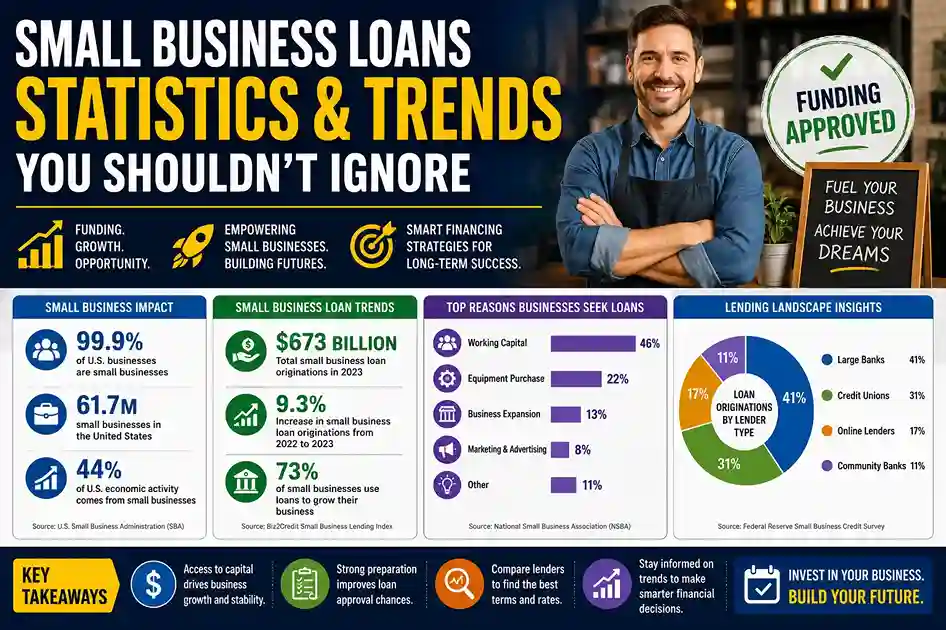
Small businesses are the backbone of the American economy. They drive innovation, create jobs, strengthen local communities, and contribute significantly to economic growth. Yet despite their importance, access to capital remains one of the biggest challenges facing entrepreneurs.
Whether you’re launching a startup, expanding operations, purchasing equipment, hiring employees, or managing cash flow, small business loans can provide the financial support needed to achieve growth objectives. Understanding current lending statistics and market trends can help business owners make informed borrowing decisions and identify opportunities in an evolving financial landscape.
This guide explores the latest small business loan trends, key lending statistics, and important insights every entrepreneur should know before seeking financing.
Why Small Business Loans Matter
Access to funding is often the difference between business growth and stagnation.
Small business loans help companies:
- Purchase equipment
- Expand locations
- Hire staff
- Manage seasonal cash flow
- Invest in technology
- Build inventory
- Cover operational expenses
- Launch new products or services
For many businesses, external financing provides the flexibility needed to capitalize on opportunities without draining working capital reserves.
The Importance of Small Businesses in the U.S. Economy
Small businesses play a critical role in the American economy.
According to data from the U.S. Small Business Administration, small businesses account for the vast majority of businesses operating across the United States.
They contribute significantly to:
- Job creation
- Economic development
- Innovation
- Community growth
- Tax revenue generation
Because small businesses are such a vital part of the economy, lenders, government agencies, and financial institutions continue developing programs designed to improve access to capital.
Current Small Business Lending Landscape
The lending environment has changed considerably over the past decade.
Business owners now have more financing options than ever before, including:
Traditional Bank Loans
Banks continue to offer some of the most competitive interest rates available.
Benefits include:
- Lower interest rates
- Longer repayment terms
- Larger loan amounts
However, qualification standards are often stricter.
SBA Loans
Loans backed by the U.S. Small Business Administration remain among the most popular financing options.
Advantages include:
- Lower down payments
- Competitive rates
- Flexible terms
- Extended repayment periods
Online Business Lenders
Fintech lenders have expanded rapidly.
Benefits often include:
- Faster approvals
- Simplified applications
- Flexible qualification requirements
These loans can be especially useful for businesses needing quick access to capital.
Credit Unions
Many credit unions offer competitive business lending products while providing personalized service.
Small Business Loan Approval Trends
Loan approval rates continue to fluctuate based on economic conditions, interest rates, and lender risk assessments.
Several factors influence approval decisions:
Credit Score
Businesses with stronger personal and business credit profiles generally have better approval odds.
Annual Revenue
Lenders often evaluate consistent revenue growth when assessing risk.
Time in Business
Established businesses typically qualify more easily than startups.
Cash Flow
Positive cash flow demonstrates a company’s ability to manage debt obligations.
Business owners should regularly monitor these metrics before applying for financing.
Rising Demand for Working Capital Loans
One of the biggest trends in recent years is increased demand for working capital financing.
Businesses use working capital loans to:
- Cover payroll
- Purchase inventory
- Manage seasonal fluctuations
- Address temporary cash flow shortages
Economic uncertainty and changing consumer spending patterns have encouraged many businesses to maintain greater financial flexibility.
Technology Is Transforming Business Lending
Technology continues reshaping the lending industry.
Digital platforms now allow borrowers to:
- Apply online
- Upload documents electronically
- Receive faster decisions
- Access funding more quickly
Artificial intelligence and automated underwriting systems help lenders evaluate applications more efficiently.
As a result, many businesses receive funding decisions in days rather than weeks.
Small Business Owners Are Comparing Multiple Financing Options
Today’s entrepreneurs are becoming more informed borrowers.
Instead of accepting the first financing offer available, many business owners compare:
- Interest rates
- Fees
- Loan terms
- Repayment schedules
- Funding speed
This trend encourages greater transparency among lenders and helps businesses secure more favorable financing arrangements.
Equipment Financing Remains a Popular Choice
Many businesses prefer equipment financing when purchasing:
- Vehicles
- Machinery
- Manufacturing equipment
- Medical devices
- Technology systems
Equipment loans allow companies to spread costs over time while preserving cash reserves.
Because the equipment often serves as collateral, qualification requirements may be less restrictive than unsecured loans.
Business Lines of Credit Continue Growing
A business line of credit offers flexibility that traditional loans may not provide.
Instead of receiving a lump sum, borrowers access funds as needed.
Advantages include:
- Pay interest only on borrowed funds
- Reusable credit availability
- Improved cash flow management
- Emergency funding access
Many small business owners view lines of credit as an essential financial safety net.
Women-Owned Businesses Are Increasingly Seeking Funding
Women-owned businesses represent one of the fastest-growing segments of the U.S. economy.
As entrepreneurship among women continues expanding, demand for business financing has increased significantly.
Many lenders now offer programs specifically designed to support:
- Female entrepreneurs
- Minority-owned businesses
- Veteran-owned businesses
- Underserved communities
These initiatives aim to improve access to capital and encourage business growth.
Startup Financing Challenges Remain Significant
While funding opportunities have expanded, startups still face unique obstacles.
Common challenges include:
- Limited operating history
- Lack of collateral
- Unproven revenue streams
- Insufficient business credit
Many startups rely on:
- SBA microloans
- Personal savings
- Angel investors
- Venture capital
- Business credit cards
Developing a detailed business plan can improve financing opportunities for new ventures.
Interest Rates Continue Influencing Borrowing Decisions
Interest rates play a major role in lending activity.
When rates rise:
- Monthly payments increase
- Borrowing costs rise
- Businesses may delay expansion
When rates decline:
- Financing becomes more affordable
- Loan demand often increases
- Growth initiatives accelerate
Business owners should monitor economic conditions and evaluate financing opportunities carefully.
The Growing Role of Alternative Lending
Alternative lenders have become increasingly important within the small business financing ecosystem.
These lenders often provide:
- Faster approvals
- Flexible underwriting
- Shorter funding timelines
Alternative financing options may include:
- Merchant cash advances
- Invoice financing
- Revenue-based financing
- Short-term business loans
While these products can provide quick access to capital, borrowers should carefully review costs and repayment terms.
Common Reasons Small Business Loan Applications Are Denied
Understanding common denial reasons can help applicants improve their chances of approval.
Frequent issues include:
Poor Credit History
Low credit scores remain one of the leading causes of loan rejection.
Insufficient Cash Flow
Lenders need confidence that businesses can repay borrowed funds.
High Existing Debt
Excessive debt obligations may increase perceived risk.
Incomplete Documentation
Missing financial statements or inaccurate information can delay or prevent approval.
Limited Business Experience
Startups and new business owners may face additional scrutiny.
Preparation significantly improves application outcomes.
How to Improve Your Chances of Loan Approval
Business owners can strengthen their applications by focusing on several key areas.
Improve Credit Scores
Pay bills on time and reduce outstanding balances.
Organize Financial Records
Prepare:
- Tax returns
- Profit and loss statements
- Balance sheets
- Bank statements
Reduce Existing Debt
Lower debt levels improve lender confidence.
Create a Strong Business Plan
A detailed business plan demonstrates preparedness and growth potential.
Build Business Credit
Establishing business credit can improve future financing opportunities.
Future Small Business Lending Trends
Several trends are expected to shape the future of business financing.
Increased Digital Lending
Technology will continue streamlining applications and approvals.
Data-Driven Underwriting
Lenders increasingly use alternative data to evaluate risk.
More Flexible Financing Products
Customized funding solutions are becoming more common.
Expanded Access to Capital
Government programs and private initiatives may improve funding opportunities for underserved entrepreneurs.
Businesses that understand these trends can position themselves more effectively in the lending market.
Choosing the Right Loan for Your Business
Not every financing solution fits every business.
Before borrowing, evaluate:
- Funding purpose
- Repayment ability
- Interest costs
- Loan duration
- Growth objectives
Matching the loan type to your business needs can improve financial outcomes and support long-term success.
Final Thoughts
Small business loans remain one of the most powerful tools available to entrepreneurs seeking growth, stability, and long-term success. As lending technology evolves and financing options expand, business owners have more opportunities than ever to secure capital tailored to their unique needs.
Understanding key business lending statistics and trends can help entrepreneurs make smarter borrowing decisions, improve approval chances, and identify financing solutions that align with their goals.
Whether you’re launching a startup, expanding an established company, purchasing equipment, or strengthening cash flow, staying informed about the small business lending landscape can give you a competitive advantage in today’s rapidly changing economy.